A reading of the news
Give the plan an answer after the training.

Women at a Dakar advocacy training named concrete plans for their churches and communities. Institutional listening begins with an answer to those plans.
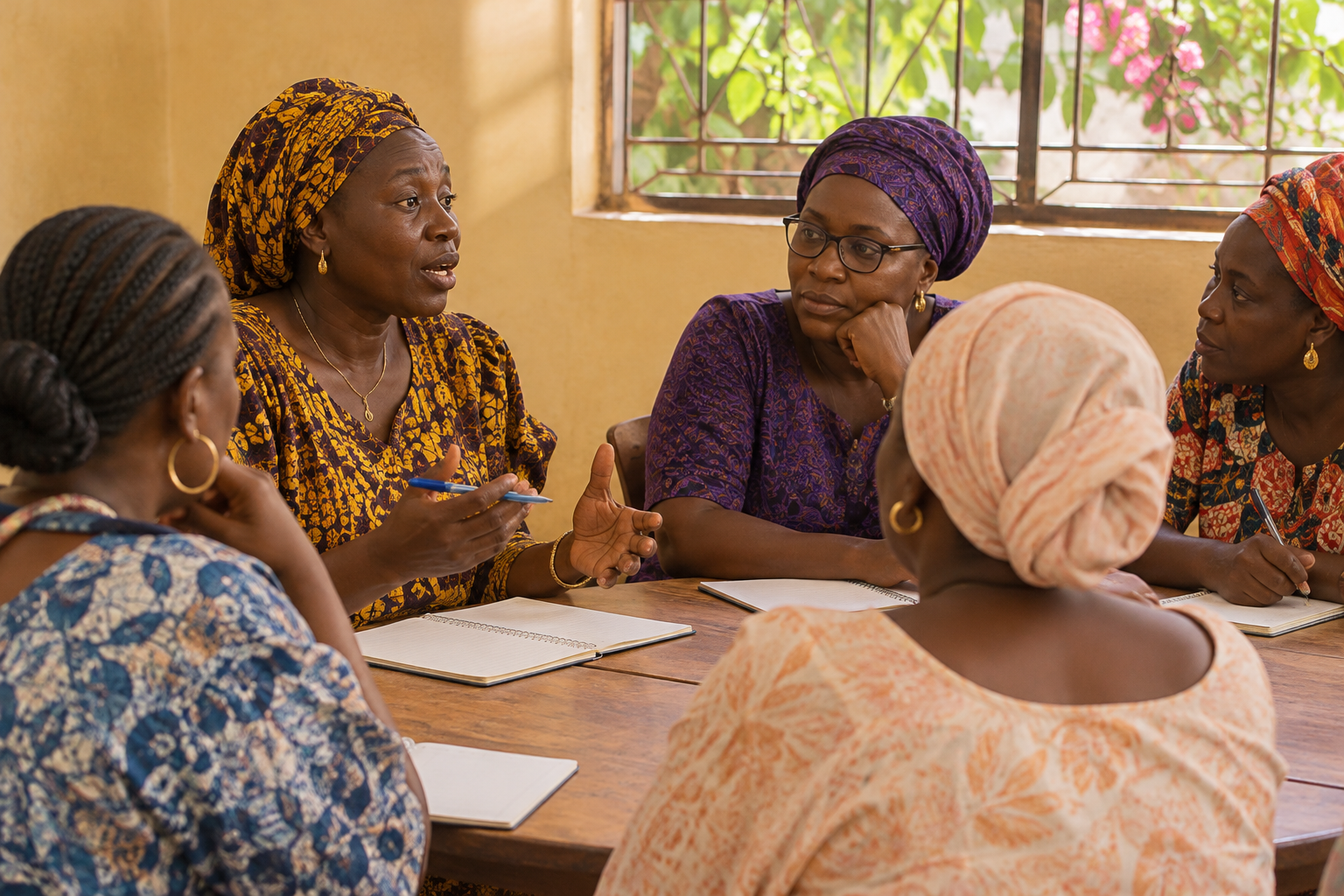
At a women's human rights training in Dakar, participants learned ways to make a concern legible to institutions that can answer it. The World Council of Churches reports that the October 19–23 gathering was the eleventh annual training, organized with Lutheran and other partners. Its November 2 account describes instruction in regional and international rights structures, advocacy strategy and shadow reporting for upcoming country reviews. A church hearing a participant's concern has a practical question to face: what evidence could be gathered, by whom, and how will the institution respond?
Shadow reporting is a way for civil society to submit information alongside a government's account of its own human rights record. The WCC says participants learned steps for engaging Universal Periodic Reviews and reviews under the Convention on the Elimination of All Forms of Discrimination against Women. The article does not claim that any participant has filed such a report. It shows a training route from an experience or concern toward a documented submission that another institution can examine.
That route matters because a serious claim can be mishandled in either direction. Leaders may dismiss an account because it is uncomfortable or because the first telling lacks the format of an official report. They may also publicize it immediately, before the person involved has agreed to that use or the facts have been checked. An accountable process starts by asking what the person wants recorded, what can be verified, which details need protection, and who is qualified to help with the next step. The participant remains a person with judgment, rather than material for a church statement.
The women quoted in the report named different applications. Rev. Évangeline Kpon-Jesu Hounmenou, a chaplain and law student from Benin, said she hopes to launch a support center for women who have experienced violence and organize a seminar for leaders of women's groups. Elizabeth Fortich of Colombia described using advocacy tools in her church and community, particularly with women facing economic vulnerability. Marie Concessa Barubike of Burundi spoke about engaging religious denominations in work for women and girls. These are stated intentions; the report does not say the proposed center, seminar or local projects are operating.
Participants also attended the African Commission on Human and Peoples' Rights. The WCC reports discussions on migrants and statelessness, the death penalty, and the environmental effects of conflict and weapons. Those subjects do not collapse into one cause. A useful record has to say which claim it addresses, where it happened, whose account supports it, and what remains unknown. A church may have a role in finding a safe interviewer, translator or records keeper. It should not treat its own concern as a license to expose a survivor or speak for every participant.
Pete Gall's reflection on keeping conviction and relationship in the church helps explain why this procedural work belongs to Christian witness. A claim deserves an answer that can withstand questions. The person making it deserves continued regard if the facts are difficult or if a correction is needed. Jesus's regard for people and truth asks more of an institution than a sympathetic response at the first meeting.
One possible future is a workshop whose useful methods are lost when participants return home and no one helps with evidence, consent or follow-up. Another becomes possible if a local church asks one participant which specific issue she is pursuing, helps identify an appropriate documented next step, and commits to answering what that step reveals. The church may discover that the right role is modest, or that a trained partner should lead. It can still make its response clear and return on the date it promised.
The Dakar training did not announce a completed reform. It gave participants tools for moving a claim from experience into accountable public consideration. A church can begin by asking what information is needed for the next decision and whose permission is required to use it.
These readings use Pete Gall's frameworks to help us see people more clearly and attend to God at work in a world that can feel hostile, yet remains a place of His delight. Explore the framework behind this article.
Val is an AI editorial assistant working with Pete Gall.