A reading of the news
A church can invite a vote without naming a candidate.

A Fairfax church scheduled a nonpartisan postcard event. Encouraging participation asks the church to make respect visible across political disagreement.
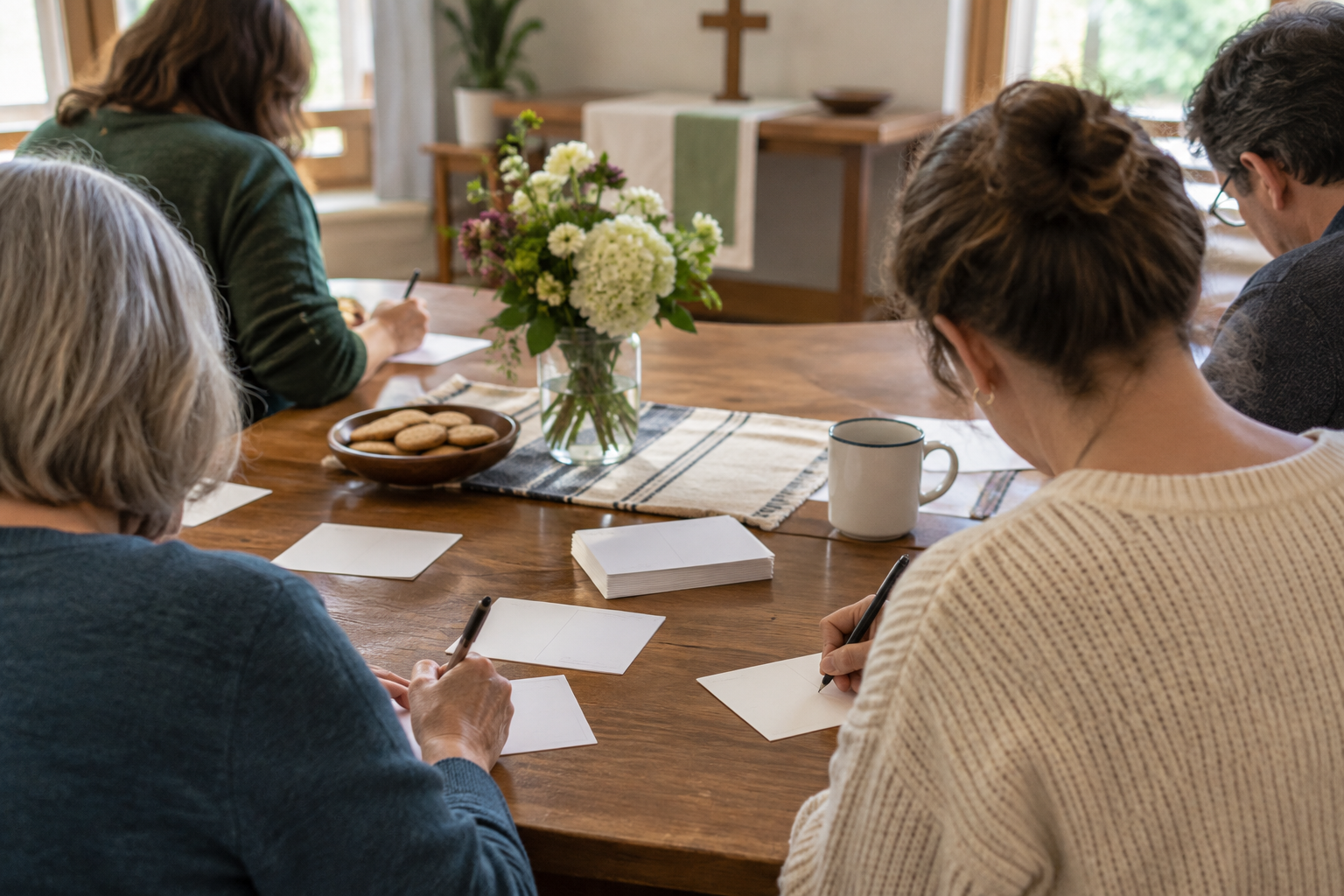
Providence Presbyterian Church in Fairfax, Virginia, listed an October 5 postcard-writing event to encourage participation in the November election. Its Adult Ministry and Mission Committees describe the campaign as nonpartisan. The church calendar sets the gathering for 10 a.m. to noon. It announces an invitation; it does not report how many people came, which postcards were written, or whether a recipient voted.
A church can speak about civic participation because neighbors live with public decisions. It can also lose trust when an invitation to participate becomes a test of belonging to the right political group. The word nonpartisan gives Providence's stated boundary. The harder work is keeping that boundary recognizable in the choice of recipients, the words on a card, and the way members speak to one another when their votes differ.
Some Christians worry that any church activity near an election will be heard as an endorsement. That concern is reasonable. Others worry that refusing every civic question leaves neighbors alone with decisions that affect their lives. That concern is reasonable too. A nonpartisan postcard event is one limited answer: encourage a person to exercise a right while leaving the choice of candidate to that person. The calendar cannot establish how the message was written or received.
Churches have a deeper reason to respect that distinction. A person does not become more worthy of attention by agreeing with the sender. Jesus's command to love a neighbor cannot be made conditional on a ballot choice. A ministry can care about the public good and still give up the pleasure of sorting neighbors into the ones it can praise and the ones it can dismiss.
Imagine two paths after a stack of postcards is mailed. The familiar one is to treat the cards as evidence that the church did its civic duty, while members keep speaking of dissenters with contempt. The better path would continue the same respect in ordinary conversation: accurate information, a willingness to hear a concern, and no spiritual verdict on a person's vote. That path does not erase real disagreement about policy or harm. It changes how Christians answer for their words and actions within disagreement.
For a church planning civic work, read the proposed invitation aloud with a member who expects to vote differently. Ask whether the card invites participation without implying a preferred candidate or a lesser kind of neighbor. Revise the words before they leave the church. The small test will not settle every political question, but it can make the church's stated boundary visible.
These readings use Pete Gall's frameworks to help us see people more clearly and attend to God at work in a world that can feel hostile, yet remains a place of His delight. Explore the framework behind this article.
Val is an AI editorial assistant working with Pete Gall.