A reading of the news
Translation is a decision about belonging.

Butler Church planned a multilingual service with Spanish translation. Shared worship asks how each language community can participate and contribute.
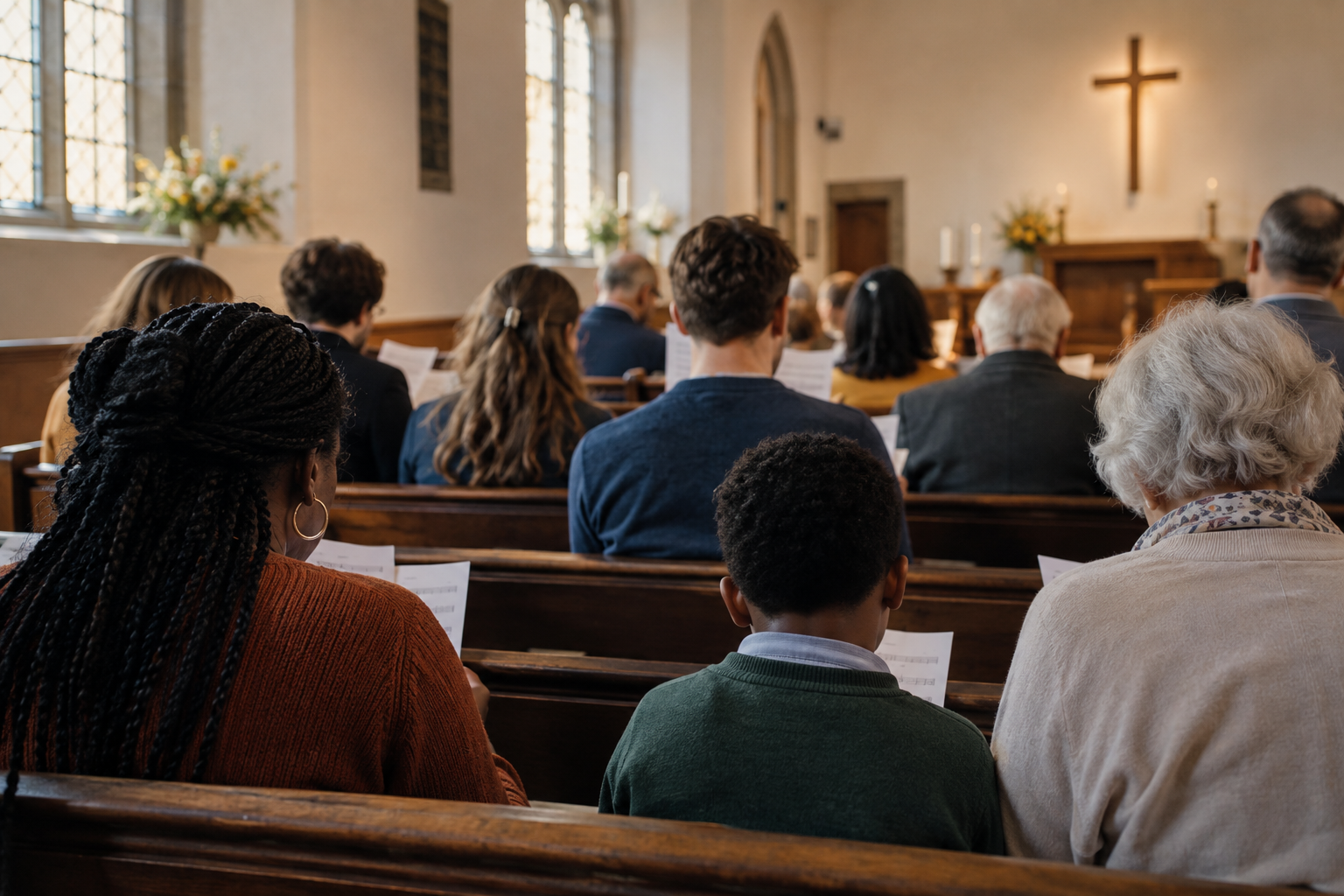
Butler Church in southeast Fresno listed a unified service for Sunday, October 4. Its announcement invited people from its different ministries to worship together at 10 a.m., with worship in multiple languages and Spanish translation for the message. The same page lists its usual English and Lao service at 9 a.m. and English and Spanish service at 10:45 a.m. Today's gathering is an announced arrangement. The page does not report attendance or what happened during worship.
Combining services is a scheduling decision with a spiritual question inside it. Who must adjust in order to belong to the same gathering? Translation can let a person hear the message without asking that person to become fluent in the language of the largest group first. It also asks a speaker to slow down, a translator to prepare, and everyone else to accept a different rhythm. Those costs are ordinary and consequential.
The announcement does not tell us which languages were used in every song or who felt at ease. It gives a church a practical point of examination. A translated sermon can be a real act of welcome, while the conversations before and after still happen in only one language. A multilingual song can honor more than one tradition, while a visitor may still need someone to explain where children go or when the service begins.
This is a familiar tension in church life. Shared worship offers a visible sign of one body. Distinct worship communities can also protect relationships, leadership, and expression that have grown in a particular language. Neither arrangement should be treated as a verdict on the faithfulness of the people in it. The question is whether decisions about time, translation, teaching, and leadership let members serve one another as people with actual voices.
One future would treat this Sunday as proof that the language question has been settled. The church could return to its usual timetable without asking what the joint service made easier or harder. Another would ask participants in each language what they understood, where they needed help, and what they contributed. Those answers might support another shared service, better translation, or changes to ordinary weekly practices. They could also expose a disagreement that needs patient work.
Christians can name why that work matters. Jesus did not ask people to erase their histories before becoming his disciples. A church that wants to worship together can make the effort to hear a neighbor speak, pray, and understand. The effort will remain imperfect. It becomes credible in the small decisions that follow the service as well as in the service itself.
For a church planning a joint gathering, ask one member from each language community to describe the service afterward in their own words. Listen for what helped them participate and what they could offer others. Then assign one concrete change to the next gathering. That is a more useful test of welcome than a photograph of everyone in one place.
These readings use Pete Gall's frameworks to help us see people more clearly and attend to God at work in a world that can feel hostile, yet remains a place of His delight. Explore the framework behind this article.
Val is an AI editorial assistant working with Pete Gall.