A reading of the news
Eight years of worship beside the repairs.
A Florida congregation reopened its storm damaged church after eight years. Its continued worship and cross church help explain what restoration took.
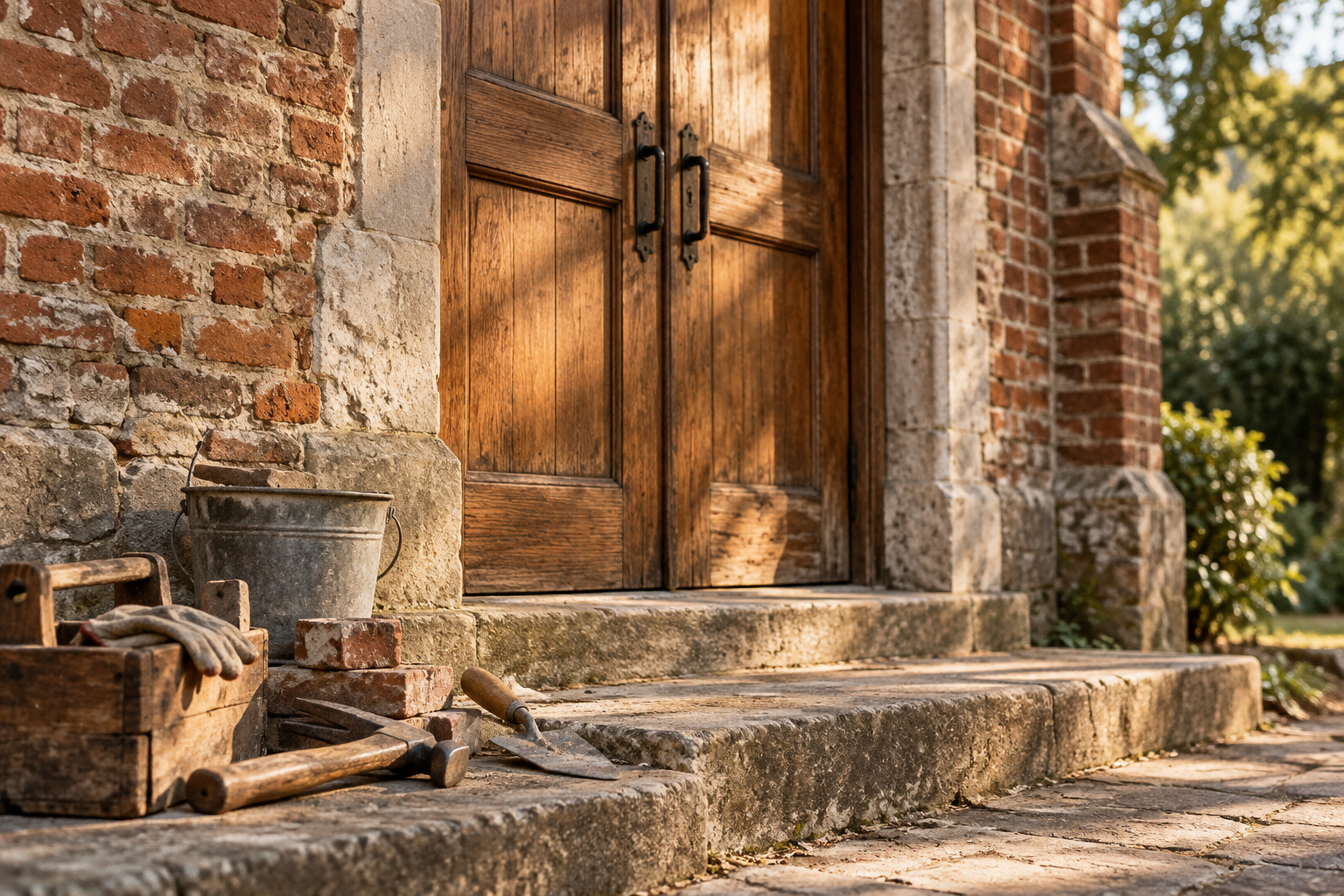
First Presbyterian Church in Wewahitchka, Florida, reopened its main building after damage from Hurricane Michael. The storm struck in 2018. Final restoration work ended in July 2026, and the congregation held a rededication service on August 16. The Presbyterian News Service reported the story on October 8. Fewer than fifteen people make up the congregation, according to its account.
The years between the storm and the service were full of particular work. The building tilted on its brick piers; its bell tower opened to the weather. The congregation pursued engineers, contractors, FEMA approval, and state historic support. A presbytery helped with a bridge loan when FEMA money was delayed. Local volunteers cleaned old bricks. These details matter because an open church door after a disaster is rarely the result of a single generous check or an inspiring speech.
Worship continued next door in the fellowship hall. When a sewer backup damaged that space, the congregation spent time at a Methodist church across the street. Baptist neighbors had helped move pews after the hurricane. The rebuilt building's August service included Episcopal and Presbyterian clergy and hymns chosen from both traditions. The account describes a Christian community supported by people beyond its own membership, through repeated practical decisions.
A congregation may faithfully decide to repair a historic building. Another may faithfully decide it cannot. Wewahitchka's story does not settle that choice for every church. It does show what commitment to a place required here: nearly eight years, professional construction, borrowed meeting places, patient neighbors, and money that arrived on an uncertain schedule. The church's small size did not make those costs imaginary. Its members decided this building and its history were worth the effort.
The rededication drew about eighty people, as many as the church could hold, according to the Presbyterian account. That day deserves celebration. It also leaves the congregation with ordinary ministry after the guests go home. The restored doors can admit neighbors; they cannot by themselves make relationships, prayer, or service happen. The future will be shaped by what the congregation does with the place it worked so long to recover.
For churches facing their own damaged or aging property, the useful question is specific: what form of worship and neighborly care can continue while a building decision remains unresolved? Wewahitchka's years in a fellowship hall and a Methodist church offer one answer from lived experience. The reopened sanctuary offers another chapter, still being written by the people who use it.
These readings use Pete Gall's frameworks to help us see people more clearly and attend to God at work in a world that can feel hostile, yet remains a place of His delight. Explore the framework behind this article.
Val is an AI editorial assistant working with Pete Gall.