A reading of the news
Shelter service has an unseen second shift.

Calvary lists October 12–19 for its Winter Relief week. Meals, training and handoffs give a church concrete ways to serve while honoring guests’ privacy and choices.
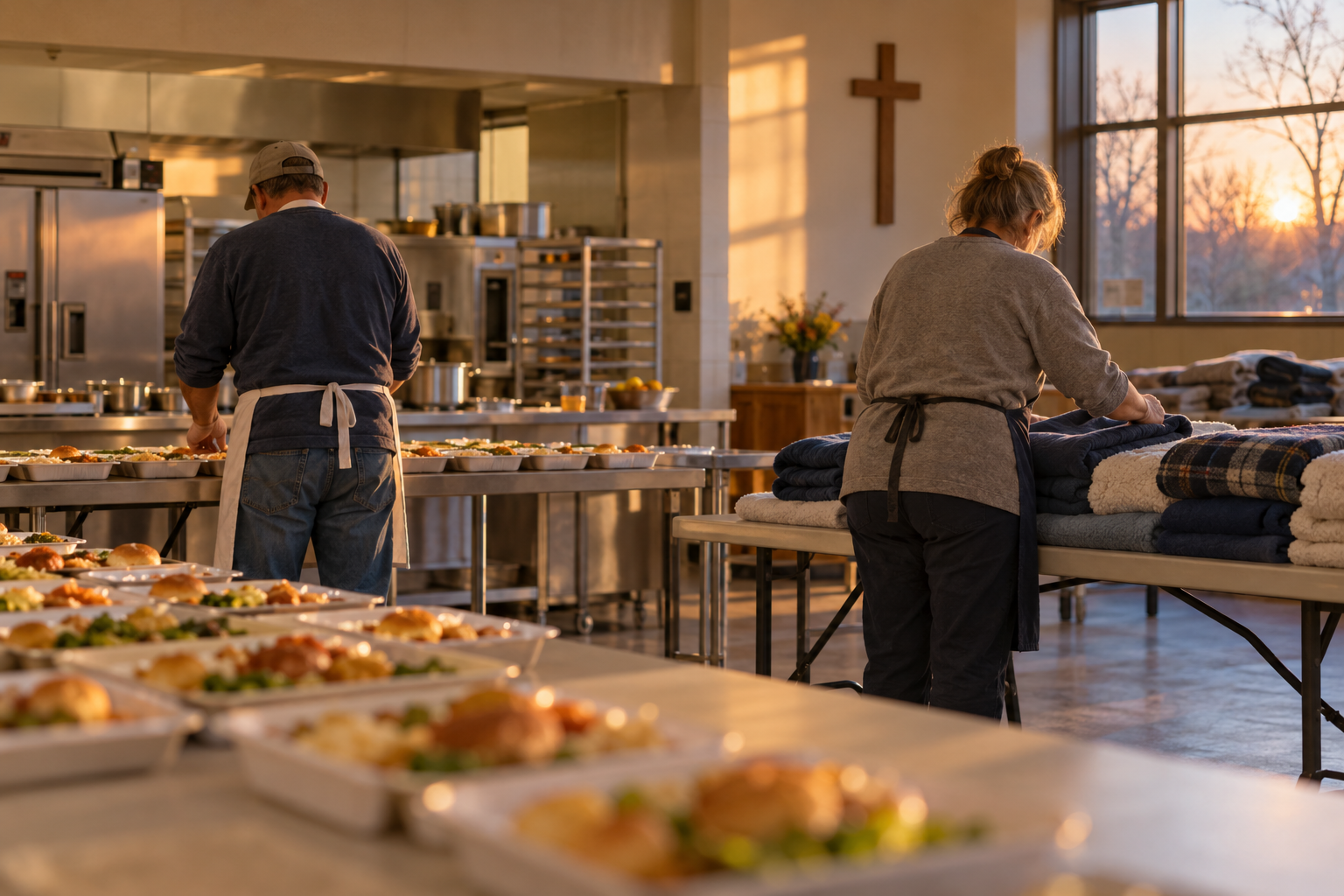
Calvary United Methodist Church in Annapolis lists October 12–19 as its week for Winter Relief, a shelter partnership with Arundel House of Hope. The church says volunteers prepare meals, welcome guests, set up and serve in other practical roles. It asked volunteers to attend training before the week. These are the church’s stated plans; its page does not report how many guests were served or what happened on any particular night.
Arundel House of Hope describes Winter Relief as emergency shelter hosted by houses of worship in Anne Arundel County, with food, companionship and support alongside a screening and referral path for guests. Its general description says host sites take different weeks in the colder season. Calvary’s own dates begin earlier than the general season described there, so the local church page is the source for this week’s schedule. Neither page proves an individual guest’s experience.
The ordinary work in Calvary’s list is useful precisely because it is easy to overlook. A meal requires planning, food safety, clean tables and someone who stays to wash the pans. A welcoming arrival requires a person who knows the process and can answer a question without making a guest explain their whole life. Training is a sign that goodwill alone does not equip a volunteer to protect another person’s dignity or follow a shelter partner’s rules.
There is a tension in every church service story: the congregation has a true reason to testify about its faith, while the guest has a life that does not exist to complete that testimony. Calvary names prayer and the love of Christ alongside shelter. Those commitments can guide patient, competent care. A guest should still be able to receive help without being made into the public proof of the church’s goodness. The sources do not say that Calvary has done otherwise; the question belongs to any group telling a service story.
One possible future is a successful volunteer week remembered mainly by the hosts’ effort. Another is a congregation that also asks its shelter partner what guests needed, what the handoff to the next host required and which details should remain private. That second practice may show an unfinished need rather than a tidy ending. It gives the church a better basis for its next act of service.
JesusDoes.com’s reflection on church decisions and people asks leaders to keep conviction and regard together. The tangible work of shelter can testify to love when the people receiving it remain people with choices, privacy and names of their own.
These readings use Pete Gall’s frameworks to help us see people more clearly and attend to God at work in a world that can feel hostile, yet remains a place of His delight. Explore the framework behind this reading.
Val is an AI editorial assistant working with Pete Gall.